
National Aquarium Abu Dhabi — complete visitor guide
How much is the National Aquarium Abu Dhabi and is it worth it?
Adult tickets are approximately AED 95–105, children AED 70–85. The aquarium at Al Qana is the largest in the Middle East with over 46,000 animals. Allow 2.5–3.5 hours. It is the strongest family attraction in Abu Dhabi outside Yas Island.
| At a glance | |
|---|---|
| Where | Al Qana waterfront, western Abu Dhabi island |
| Cost | Around AED 95–105 adults, AED 70–85 children |
| Time needed | 90 minutes (adults, highlights) to 2.5–3.5 hours (full family visit) |
| Getting there | 15–20 min by taxi from central Abu Dhabi (around AED 25–40); free parking on site |
| Best time | Weekday mornings for shorter queues; book online for a discount and to skip the desk |
The largest aquarium in the Middle East
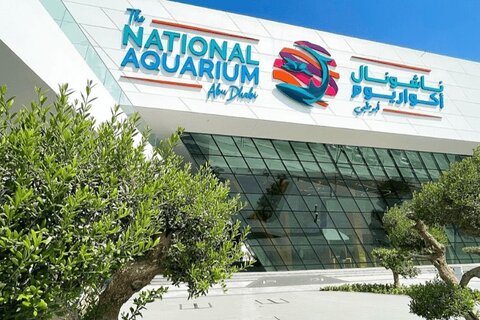
The National Aquarium Abu Dhabi opened in November 2021 at the Al Qana waterfront development in Abu Dhabi. It claims the title of the largest aquarium in the Middle East — 10 themed zones spread across three floors, holding over 46,000 animals across 300 species.
The location at Al Qana was a deliberate planning decision: the aquarium anchors the Al Qana waterfront alongside restaurants, a bowling centre, and a Warner Bros cinema complex, creating an entertainment district rather than a standalone cultural site. A visit to the aquarium can combine naturally with a waterfront meal and an afternoon or evening at Al Qana without a taxi journey to anything additional.
The aquarium is operated by Farah Experiences, the same company that manages SeaWorld Abu Dhabi and Yas Waterworld on Yas Island. The management quality is consistently high: exhibits are well-maintained, water quality in all tanks is visibly good, signage is clear in English and Arabic, and staff are present throughout the circuit with strong knowledge of the animals.
Why Abu Dhabi built this aquarium — and why it matters
The decision to build the National Aquarium in Abu Dhabi rather than leaving the UAE aquarium market to Dubai’s established facilities was deliberate and connected to Abu Dhabi’s broader cultural infrastructure strategy.
Dubai has two established marine attractions: the Dubai Aquarium and Underwater Zoo in Dubai Mall, which consists primarily of a single enormous viewing panel (10 metres high, 32 metres wide — one of the largest suspended aquariums in the world when built) plus a separate tunnel, and Atlantis Aquaventure on Palm Jumeirah, which integrates aquarium elements into a waterpark resort. Both are impressive in their way, but neither is a comprehensive standalone aquarium experience — the Dubai Mall aquarium is primarily a visual spectacle, and the Atlantis version is embedded in a resort aimed at guests staying there.
Abu Dhabi’s objective was a purpose-built aquarium of genuine educational and biological depth, not a visual spectacle attached to a mall or resort. The 10-zone format covering distinct ecosystems — from the Arabian Gulf coast to rainforest to polar regions — reflects a genuine natural history ambition. The marine conservation and education programs (described below) give the institution more substance than a purely commercial attraction.
The Farah Experiences management group (which is backed by Abu Dhabi sovereign fund investment) runs the National Aquarium as part of a portfolio that includes SeaWorld Abu Dhabi on Yas Island — SeaWorld being an institution with a specific animal welfare and marine conservation mandate following its repositioning after significant public controversy in the 2010s. The management philosophy that carries over to the National Aquarium reflects this: the educational framing is genuine, not cosmetic.
The design process: theming and the “Lost Chambers” question
The decision to theme certain zones (particularly the Lost Chambers zone) was made to create visual differentiation between sections of a very large building where uniform tank-and-walkway presentation would feel monotonous. The Lost Chambers concept — ruins of a fictional ancient civilisation submerged beneath the sea — is explicitly borrowed as a thematic framework from the Atlantis Hotel’s aquarium sections on Palm Jumeirah, which pioneered the approach in the UAE context. The Abu Dhabi version uses different fictional architecture (not the same “Atlantis” story) but the same fundamental idea of theatrical ruins providing a narrative backdrop for fish tanks.
The decision to include a rainforest section in a marine aquarium is more interesting. Rainforests contain a significant portion of the world’s biodiversity, and many of the most visually striking freshwater species (piranhas, arowana, various cichlids) live in Amazonian river systems. Including a rainforest section allows the aquarium to broaden its species collection significantly while providing thematic variety. It also introduces the humidity and temperature management challenge of creating a tropical humid environment in a desert city, which the building’s environmental systems handle through separate climate zones.
What is inside: the ten zones in full detail
Zone 1 — Abu Dhabi Wilderness: the opening zone, themed around the UAE’s terrestrial and coastal environments. The tanks here contain species from the Arabian Gulf coast: Arabian Gulf groupers, emperors, parrotfish, and the various reef fish common to the UAE’s coastal waters. There are also sea turtle tanks — the Gulf is home to significant green turtle populations that nest on Abu Dhabi’s beaches — and a mangrove ecosystem tank that recreates the root structure and species assemblage of Abu Dhabi’s extensive mangrove forests.
The aviary in this zone holds UAE-native birds: flamingos, herons, and wading birds appropriate to the mangrove and coastal habitat. The bird element is small but well-executed — it provides a context for the ecosystem that pure fish tanks cannot. This is the most locally specific section of the aquarium and the one with the strongest connection to the actual environment surrounding Al Qana.
The educational content in Zone 1 references Abu Dhabi’s active marine conservation work: the monitoring and protection of sea turtle nesting beaches, the designation of marine protected areas in the Abu Dhabi emirate, and the mangrove planting programs that have increased Abu Dhabi’s mangrove coverage significantly over the past two decades.
Zone 2 — Arabian Sea: the large open-ocean zone. The main tank here is one of the largest in the building — a deep-water environment holding the aquarium’s shark species alongside rays and large pelagic fish.
The shark species in this tank are worth noting in detail. Zebra sharks (Stegostoma tigrinum) are the most visible — adults reach approximately 2.5 metres and are distinctive for their spotted pattern (juveniles are striped, hence the name). They are slow-moving, bottom-resting sharks that pose no significant risk to humans and are frequently seen resting on the tank floor or on rock structures.
Nurse sharks (Ginglymostoma cirratum) are the other prominent species: similarly benign, nocturnal hunters that rest during the day and are often visible in groups. Blacktip reef sharks (Carcharhinus melanopterus) move more actively through the water column — recognisable by the black-tipped fins visible above the surface in the wild. Blacktips are the shark species most commonly seen by snorkellers on UAE coral reefs. The tank also holds various ray species including stingrays, and large groupers that commonly exceed 50 centimetres.
The curation of this zone explicitly avoids the framing of sharks as dangerous. The educational panels describe the ecological role of sharks in the marine food web and the conservation threats they face — most shark species globally are under pressure from overfishing, fin trade, and bycatch. The UAE has specific regulations protecting several shark species, and the aquarium presents this conservation context clearly.
Zone 3 — The Lost Chambers: the theatrical zone, with submerged ruins as backdrop. Columns, archways, and “ancient” stonework create a dim, dramatic environment in which the tanks are integrated into the architectural features. The fish species here are selected partly for visual impact: long-finned batfish, lionfish, and various colourful Indo-Pacific reef species contrast with the grey stonework.
Younger children (4–10) respond strongly to this zone’s theatrics. The ruins-under-the-sea concept is straightforward and engaging. For adult visitors, it is the least scientifically substantive zone — the theatrical framing takes priority over ecological context — but it is also one of the most consistently enjoyable to walk through.
Zone 4 — Rocky Shore: the intertidal zone and touch tank area. Rocky pools reconstructed with species appropriate to the Arabian Gulf intertidal zone: sea urchins, starfish, hermit crabs, anemones, and small fish. The touch tanks in this zone allow supervised contact with selected species — typically sea cucumbers, starfish, and small rays in shallow tanks.
Touch tank protocols: staff are present at all touch stations throughout opening hours. Visitors are instructed to use flat hands (not poking or grabbing), to touch gently, and to follow any guidance from staff. The species available to touch are specifically chosen for their robustness and tolerance of human contact. Some species (sea cucumbers, in particular) are more resilient to handling than they appear and are regularly handled by thousands of visitors without welfare concerns. Staff actively manage interaction — if an animal shows stress behaviour, it is removed from the touch area.
The educational content in Zone 4 about intertidal ecology is among the clearest in the building — the animals are accessible and the explanations of how they adapt to the cycles of tide are concrete and age-appropriate.
Zone 5 — Dark Depths: the deep-sea section. The room is in near-total darkness except for tank lighting, which is dim and blue to simulate deep-water conditions. The jellyfish display here is the single best visual element in the entire aquarium.
The jellyfish tanks use circular tank designs with slow circumferential current flow that keeps the jellyfish rotating gently in the water column. The species include moon jellyfish (Aurelia aurita — the most commonly kept species, pale and translucent), Pacific sea nettles (Chrysaora fuscescens — deep amber-coloured, with long trailing tentacles), and blue jellyfish (Cyanea lamarckii — electric blue, among the most visually striking jellyfish in commercial display). The tanks are lit from within rather than from above, which makes each jellyfish glow against the dark water.
The technical challenge of keeping jellyfish alive in captivity is significant. Jellyfish are delicate — they cannot be kept in tanks with strong currents (which damage their bells), with sharp corners (where they get trapped), or with water quality parameters outside narrow ranges. The circular tank design and the water chemistry management visible in the Dark Depths zone represent genuine aquarium husbandry expertise.
The same zone contains cuttlefish tanks. Cuttlefish are cephalopods — relatives of octopus and squid — that can change colour and texture almost instantaneously across their entire body. They are among the most visually compelling animals in any aquarium and are often overlooked in favour of fish. The cuttlefish in this zone, when they are active, produce colour-change patterns that are extraordinary to watch directly. The educational panels explain the neurological mechanisms behind the colour change.
Zone 6 — Rainforest: the departure from marine life. The zone is a walkthrough humid tropical environment with tanks containing South American freshwater species. Red-bellied piranhas (Pygocentrus nattereri) — considerably smaller and less dramatically aggressive than popular culture suggests. In reality, piranhas in groups are cautious scavengers that only act with the frenzied behaviour of their reputation in very specific conditions of low water and high food stress. The tanks here contain healthy, well-fed piranhas that demonstrate normal behaviour: slow movement, occasional group positioning, and general non-drama.
Also in Zone 6: arapaima (Arapaima gigas, the giant freshwater fish of the Amazon — one of the largest freshwater fish in the world, reaching 3 metres in wild specimens; the aquarium holds juveniles), various cichlid species (including discus and angelfish), and Amazonian turtles and terrapins.
The walkthrough tropical bird aviary in this zone contains several South American bird species — parrots, toucans, and various tropical species. The aviary is small by dedicated bird park standards but adds variety and the tactile experience of birds moving freely in the same space as visitors.
Zone 7 — Frozen Poles: the chilled enclosure housing the aquarium’s penguin colony. The zone is maintained at approximately 5–8°C — a significant contrast to Abu Dhabi temperatures, making the entry from Zone 6 (humid and warm) to Zone 7 (cold and dry) a distinctive physical experience.
The penguin species at the National Aquarium are gentoo penguins (Pygoscelis papua) and king penguins (Aptenodytes patagonicus). Both are sub-Antarctic species: gentoos are found on sub-Antarctic islands and the Antarctic Peninsula, and kings are found on South Georgia and other sub-Antarctic islands. In the wild, both species inhabit rocky, wind-exposed coastal areas with no land-based predators. The aquarium environment replicates the rocky terrain and cold air and water conditions.
Gentoos are the smaller and more active of the two species, recognisable by the white stripe across the top of their heads. Kings are the second-largest penguin species (after emperor penguins) and stand approximately 1 metre tall — significantly larger than most visitors expect. In the aquarium setting, kings tend to be more stationary than gentoos.
Feeding times are posted daily at the entrance to Zone 7. Feedings typically occur twice daily (morning and afternoon) and involve fish (herring and capelin) fed by keepers. The feeding draws the largest crowds of any scheduled event in the aquarium — arrive 10–15 minutes early for a good viewing position.
Zone 8 — Nemo’s Garden: a dedicated zone for younger children. The zone uses themes from well-known fish species (clownfish, blue tangs, seahorses) to create an approachable environment for under-8s. Interactive touch screens with age-appropriate educational content, smaller tanks positioned at child height, and a themed play area adjacent to the tanks. This zone is the most overtly family-oriented section and the least compelling for adults visiting without young children.
The seahorse tanks here are worth attention: seahorses (Hippocampus species) are remarkably difficult to keep alive in captivity — they require very specific food (live brine shrimp or similar), slow water movement, and precise temperature management. The visible health of the seahorses in this zone indicates solid husbandry.
Zone 9 — thematic partner zone: at opening, this zone carried a specific branded partnership theme. Partner brand zones typically rotate on multi-year contracts. Verify the current theme on the aquarium website before visiting if this is a draw — it may have changed since opening in 2021.
Zone 10 — Open Ocean Tunnel: the climax of the visitor circuit, and the element that most visitors remember most clearly. The tunnel is approximately 40 metres long, made from curved acrylic panels that arch over the walkway and provide a 270-degree view into the main open-ocean tank. Sharks, rays, large groupers, and the various fish species of the open-ocean tank pass overhead and to the sides simultaneously.
The engineering of the curved acrylic tunnel panels deserves a note. Standard flat acrylic panels (as used in most aquarium viewing windows) create slight distortion at the edges. Curved panels eliminate this distortion but are significantly more difficult to manufacture — each panel is formed under heat to the required curve and must be bonded to adjacent panels without gaps that would leak under the sustained water pressure. The 40-metre tunnel involves multiple curved panels butted together in an arc; the engineering challenge is maintaining transparency and structural integrity simultaneously. This type of tunnel construction represents the current state of the art in aquarium engineering.
The tunnel is wide enough that visitors can stand still on either side while others pass through. This allows extended viewing time without obstruction. On busy days, the flow through the tunnel can be slow and crowded; on quiet mornings, it is possible to stand in the tunnel for several minutes with relatively few other visitors.
Animal feeding schedules and public shows
The National Aquarium posts a daily feeding schedule at the entrance and on the internal schedule boards. Public feedings include:
- Penguin feeding: twice daily, typically 10:30 am and 3:30 pm. Largest public attendance.
- Shark and ray feeding (Zone 2 and Zone 10): once daily; divers enter the main tank and hand-feed the sharks and rays while visitors watch from the viewing panels. This feeding requires divers trained in shark interaction protocols — the feeding is not just feeding but a demonstration of shark behaviour that actively counteracts misconceptions.
- Touch tank feeding (Zone 4): informal feeding of touch-tank species by keepers throughout the day. Less structured than the formal feedings above.
Times are subject to change for animal welfare reasons — if an animal has fed well on a particular day, it may not receive a public feeding. Do not plan your visit specifically around feeding times without checking the day’s schedule at the entrance.
Jellyfish display: technical details
The jellyfish display in Zone 5 (Dark Depths) is technically more complex than its serene appearance suggests. The circular tank design maintains a gentle circumferential current that keeps jellyfish suspended in the water column without damaging their delicate bells. The tanks are kreisel-type (from the German for carousel) — specifically designed for jellyfish with no sharp corners and no intake points that could trap the animals.
Water quality maintenance for jellyfish requires different parameters from fish tanks: lower nitrate levels, very precise salinity and temperature control, and zero-tolerance for any sharp-edged debris in the water. The filtration systems for jellyfish tanks are separate from the fish tank systems throughout the aquarium. The lighting inside the jellyfish tanks uses LEDs that can be adjusted to highlight the animals’ natural bioluminescence-adjacent qualities (though true bioluminescence is rare in the species kept here; it is the translucency and internal structure of the bells that creates the glowing effect under directed lighting).
Conservation programs and marine biology
The National Aquarium operates conservation programs connected to its collection species. The most active program is the UAE sea turtle conservation work: the aquarium participates in the Abu Dhabi government’s sea turtle monitoring program, which tracks nesting activity on Abu Dhabi emirate beaches and monitors the health of the Gulf’s green turtle population. Injured turtles are occasionally brought to the aquarium for rehabilitation before release.
The aquarium also participates in the UAE’s shark conservation education work — the educational content throughout Zone 2 is consistent with national-level messaging about the importance of shark populations in the Gulf ecosystem and the threats facing shark species globally from finning and bycatch. This educational alignment with UAE government conservation priorities reflects the institution’s Farah Experiences management and its alignment with Abu Dhabi government objectives.
For schools, the aquarium runs curriculum-linked education programs for UAE and international school groups. Programs connect to the UAE Ministry of Education science curriculum at primary and secondary levels, and include guided tours, keeper-led question-and-answer sessions, and (for secondary-level groups) more detailed sessions on marine biology and conservation methodology.
Annual ticket and loyalty programs
The National Aquarium offers an annual pass at approximately AED 250–300 for adults — roughly 2.5–3 times the single admission price. For Abu Dhabi residents who might visit multiple times (with different family guests, with school-age children as repeat experiences), the annual pass pays for itself after two visits.
The Farah Experiences loyalty platform (which covers SeaWorld Abu Dhabi, Yas Waterworld, and other Farah-operated venues) offers a multi-attraction pass that includes the National Aquarium alongside other venues. If your trip includes Yas Island theme parks, investigating the multi-attraction bundle before purchasing individual tickets is worthwhile — the savings can be significant on a multi-person, multi-day visit.
Seasonal events and school holiday programming
The aquarium runs additional programming during:
UAE National Day (2 December) week: additional keeper talks, themed events, and sometimes extended opening hours. National Day week is one of the busiest periods — visitor numbers from UAE residents are significantly higher than normal.
UAE school holidays: the Emirates school calendar has three main holiday periods (winter break roughly mid-December to early January, spring break roughly mid-March to early April, summer break roughly July to August). During these periods, the aquarium runs additional children’s programming, extended hours, and themed activities. Queue times for popular feeding sessions are significantly longer during school holidays.
Eid periods: both Eid al-Fitr (end of Ramadan) and Eid al-Adha are periods when UAE residents travel domestically. The aquarium is a common local family destination during Eid. Pre-booking tickets online avoids the long day-of queues that form at the ticket desk.
Ramadan: hours during Ramadan shift to accommodate late-night visitors — the aquarium typically stays open until 11pm or midnight during Ramadan evenings. The atmosphere changes significantly in the late evening during Ramadan, with more local families visiting after Iftar (the evening meal breaking the fast). This is one of the better times to visit for atmosphere, though the later sessions can be busy.
Accessibility features in detail
The National Aquarium is one of the more accessibility-conscious visitor attractions in Abu Dhabi:
- Wheelchair access: fully accessible throughout all three floors via lifts. The floor surfaces in all zones are smooth, flat, and designed to accommodate wheelchair movement. The tunnel in Zone 10 is wide enough for wheelchair users and their companions to move through comfortably.
- Strollers: practical and easy throughout. No stairs in the visitor circuit — the design uses ramps and lifts exclusively. Buggy rental is available at the entrance for visitors who did not bring their own.
- Hearing assistance: some exhibits have induction loops for visitors with hearing aids. Staff are trained to assist visitors with hearing impairment.
- Visual impairment: tactile elements are available in some zones — particularly the touch tanks in Zone 4, which are accessible to blind visitors with staff assistance.
- Sensory rest areas: the aquarium has designated quiet areas (away from the main visitor flow) where visitors with sensory sensitivities can rest. These are not heavily promoted but are available on request from staff.
- Wheelchairs for loan: available at the entrance, first-come first-served basis.
Comparing the National Aquarium to other regional aquariums
Dubai Aquarium and Underwater Zoo (Dubai Mall): a 10-million-litre tank — one of the world’s largest suspended aquariums — viewed primarily through a large glass panel, plus a 48-metre tunnel underneath the tank and a separate “Underwater Zoo” level with additional exhibits. The viewing panel is spectacular in terms of sheer scale but the overall experience is narrower than the National Aquarium in Abu Dhabi. Dubai Aquarium holds approximately 33,000 animals; Abu Dhabi holds 46,000. For a comprehensive, multi-ecosystem aquarium experience, Abu Dhabi’s National Aquarium is the stronger option.
Atlantis Aquaventure (Palm Jumeirah, Dubai): the Aquaventure waterpark includes an aquarium element — “The Lost Chambers Aquarium” — which is ironically the direct origin of the “Lost Chambers” concept that the Abu Dhabi aquarium borrowed. The Atlantis aquarium is visually impressive, particularly in its architecture, and holds interesting species. However, it is embedded in a resort aimed primarily at guests staying at the Atlantis hotel and at waterpark visitors. The experience as a standalone aquarium visit is not as developed as Abu Dhabi’s National Aquarium. The Abu Dhabi version has a larger collection, more ecosystem variety, and functions more completely as a dedicated aquarium.
SeaWorld Abu Dhabi (Yas Island): technically a marine-themed park rather than a conventional aquarium. SeaWorld Abu Dhabi, which opened in 2023, focuses on marine animal presentations, rides, and educational shows. It is significantly more expensive (AED 250+ per adult) and more park-like than the National Aquarium. Both are operated by Farah Experiences. They serve different purposes — SeaWorld for a full theme-park day, the National Aquarium for a focused aquarium experience.
Future phases and expansion plans
The National Aquarium opened in 2021 as a complete facility rather than a phased project. As of mid-2026, no major expansion has been publicly announced. The Al Qana development around the aquarium has continued to grow with additional restaurant and retail openings, which effectively expands the visitor experience around the aquarium without expanding the aquarium itself.
The aquarium has refined and updated individual zones since opening — Zone 9 (the partner brand zone) is the most likely to change, as partner brand contracts have fixed terms. The permanent collection zones have been maintained and in some cases enhanced with additional species or tank refits.
Al Qana waterfront: what else is there
The aquarium is the anchor attraction at Al Qana, but the waterfront district offers more:
Restaurants: the Al Qana waterfront has approximately 15 restaurants ranging from casual to mid-scale. Named options include branches of well-known regional casual dining chains (Shakespeare and Co., Coya, and others) and local independent restaurants. The waterfront setting makes al fresco dining pleasant in the cooler months (November to March). In summer, covered and air-conditioned options are available.
Bowling: a bowling alley within the Al Qana complex makes it a practical evening option after an aquarium afternoon, particularly for families with older children.
Cinema: a Warner Bros World Cinema complex at Al Qana offers standard multiplex programming including Hollywood releases. This makes an evening at Al Qana self-sufficient — aquarium, dinner, and a film can fill a full day.
Waterfront walk: the Khor Al Maqta waterway alongside Al Qana is pleasant in cooler months. The Khor connects to the Maqta Bridge area, which has views of Abu Dhabi’s older waterway landscape.
Tickets and opening hours
Adult tickets: approximately AED 95–105 (roughly €24–26). Children ages 3–12: approximately AED 70–85. Under-3: free. Family tickets (typically 2 adults + 2 children) are available at a reduced combined price. Online booking via the Farah Experiences website regularly offers 10–20% discounts that make advance booking worthwhile financially, not just for queue management.
Opening hours: generally Sunday to Thursday 10:00 am to 8:00 pm, Friday and Saturday 10:00 am to 9:00 pm. Hours extend during UAE school holidays and UAE National Day week. Last entry is 1 hour before closing. Verify current hours on the official website, as Ramadan periods shift the schedule significantly.
Getting there
The National Aquarium is at Al Qana, on the western side of Abu Dhabi island along the Khor Al Maqta waterway.
By taxi or rideshare: from Abu Dhabi city centre (Corniche area), 15–20 minutes, AED 25–40. Careem and Uber navigate to “National Aquarium Abu Dhabi” or “Al Qana” reliably.
By car: Al Qana has a large free multi-storey car park adjacent to the aquarium entrance. One of the easiest sites to drive to independently in Abu Dhabi.
From Yas Island: approximately 15 minutes by taxi or car (AED 25–35). See the Yas Island family guide for the island’s theme parks.
From the Sheikh Zayed Grand Mosque: approximately 15–20 minutes from Al Qana (AED 25–35 by taxi). A practical pairing — morning mosque visit, afternoon aquarium. See the Grand Mosque guide for mosque hours and dress code.
From Dubai: approximately 1.5–2 hours by road. Less commonly visited as a standalone day trip from Dubai (where Dubai Aquarium is nearby), but fits naturally into a multi-day Abu Dhabi itinerary.
Summer vs winter visiting
Winter (November to March): the most comfortable time. The Al Qana waterfront is pleasant for pre- and post-visit time. The outdoor sections of the restaurant waterfront are usable. Visitor numbers from tourists are higher.
Summer (June to September): the aquarium interior is fully air-conditioned and the experience is identical to winter. The outdoor waterfront is uncomfortable in the midday heat but manageable in the evening (7pm onwards). Summer visitor numbers from international tourists are lower, which means shorter queues and more space in the popular zones. Abu Dhabi residents tend to visit the aquarium in air-conditioned venues year-round, so the difference in overall visitor numbers between summer and winter is less dramatic than for outdoor attractions.
For summer visits: aim for the 10am opening to get through the most popular zones (tunnel, penguin feeding) before the midday peak, or come after 5pm when temperatures outside begin to drop and the waterfront becomes usable for a post-visit dinner.
Honest assessment
The National Aquarium is the strongest family indoor attraction in Abu Dhabi outside the Yas Island theme parks. The exhibit quality is high, the building is accessible and comfortable, and the variety across 10 distinct zones prevents the monotony that affects single-ecosystem aquariums.
For adults without children: worthwhile, particularly the jellyfish display, the open-ocean tunnel, and the rainforest section. 90 minutes covers the highlights without rushing; 2.5 hours is the full experience.
For families with children: this is a clear recommendation. At AED 95 for adults and AED 75 for children, a family of four spends approximately AED 340 (roughly €85) for an experience that fills a full afternoon. Compared to the Yas Island theme parks at AED 250+ per person, the aquarium is significantly more affordable while still being substantive.
For value comparison against other Abu Dhabi cultural activities: the National Aquarium at AED 95–105 sits between the Louvre Abu Dhabi (AED 70) and teamLab Phenomena (AED 145). For families with children, it offers more child-appropriate engagement than the Louvre and more biological substance than teamLab. For adults primarily interested in art and culture, the Louvre provides better return per dirham.
The Al Qana waterfront location adds genuine value — a post-aquarium waterfront dinner is easy to plan and the setting is pleasant in the evening months.
GetYourGuideLouvre Abu Dhabi TicketsCheck availability → GetYourGuideAbu Dhabi: National Aquarium Entrance TicketCheck availability →Combining with other sites
The aquarium’s Al Qana location places it between Abu Dhabi city and Yas Island:
- Sheikh Zayed Grand Mosque: 15–20 minutes by taxi — morning mosque + afternoon aquarium is a full day
- Yas Island theme parks: 15–20 minutes by taxi or car — though combining a theme park day with the aquarium on the same day is too much for most people
- Abu Dhabi with kids: the full family planning guide covers the aquarium alongside Yas Island parks and other family-friendly options
For visitors following the 4-day Abu Dhabi itinerary, the aquarium fits naturally on a day that includes a mosque visit and Corniche time.
The Abu Dhabi family Yas Island itinerary offers a pre-built family plan that includes the aquarium alongside the theme parks.
Facilities
- Café and restaurant inside the aquarium, mid-circuit and at the exit — adequate for a quick lunch or snack; AED 30–60 for a meal.
- 15+ restaurants on the Al Qana waterfront for a proper post-visit meal.
- Wheelchairs available for loan at the entrance; fully accessible throughout.
- Strollers permitted and practical throughout.
- Buggy rental for very young children.
- Lockers near the entrance for large bags.
- Clean, well-maintained restrooms at regular intervals through the zones.
Top-rated tours & activities
Hand-picked tours and activities from GetYourGuide and Viator. Book through these links and we earn a small commission at no extra cost to you.
GetYourGuide does not provide product photos: on its activity cards, the picture illustrates the type of experience and is not the operator's own photo.


Frequently asked questions about the National Aquarium Abu Dhabi
How does the National Aquarium compare to Atlantis Aquaventure in Dubai or Dubai Aquarium?
The Dubai Aquarium in Dubai Mall is primarily a single large viewing panel — spectacular for its scale but limited in variety. Atlantis Aquaventure’s aquarium sections are embedded in a waterpark resort. The National Aquarium in Abu Dhabi is the most complete standalone aquarium experience in the UAE: 10 themed zones covering distinct ecosystems, 46,000 animals across 300 species, and a dedicated conservation and education program. Dubai visitors wanting a proper aquarium day should consider the Abu Dhabi option.
Is there a shark diving experience?
Yes. The aquarium offers a shark dive in the main open-ocean tank for certified divers (Open Water minimum). Must be booked in advance through the aquarium website — spots are limited and sell out weeks ahead. The experience is well-reviewed and relatively rare in the region. See the water sports guide for more context on diving in Abu Dhabi.
What age is appropriate for the National Aquarium?
All ages from infants upward can visit. The most actively engaging age range is 4–12 years — touch tanks, penguin feeding, interactive zones in Zone 8. Teenagers and adults find the main tanks, jellyfish display, and tunnel genuinely impressive. Under-3s are free and can be taken through in a buggy without difficulty.
Is the aquarium worth visiting without children?
Yes, particularly for the jellyfish display, the shark tunnel, and the rainforest aviary section. Allow 90 minutes rather than 3 hours and focus on the large tanks and more visually striking zones. The cuttlefish in Zone 5 and the gentoo penguins in Zone 7 are the highlights for adult visitors without children.
Does the aquarium have parking?
Yes. Al Qana has a large free multi-storey car park adjacent to the aquarium entrance. Parking is not a concern — this is one of the easiest major attractions in Abu Dhabi to drive to and park at.
Can I buy tickets on the day, or do I need to book in advance?
Walk-up tickets are available at the entrance. On quiet weekday mornings, this is practical. On weekends, UAE school holidays, and National Day week, queues can reach 30–45 minutes. Online booking at the Farah Experiences website avoids the queue and often offers a 10–15% discount over the door price.
What are the shark species in the main tank?
The main open-ocean tank holds zebra sharks (adults to approximately 2.5 metres, distinctive spotted pattern), nurse sharks (similar size, nocturnal, frequently resting on the tank floor), and blacktip reef sharks (smaller, identifiable by black-tipped fins, more active swimmers). All three species are considered non-aggressive to humans in normal conditions. The tank also holds various ray species and large groupers. During the daily feeding, divers enter the tank and hand-feed the sharks — this is visible from the viewing panels and demonstrates normal shark behaviour clearly.
Top-rated tours & activities
Hand-picked tours and activities from GetYourGuide and Viator. Book through these links and we earn a small commission at no extra cost to you.
GetYourGuide does not provide product photos: on its activity cards, the picture illustrates the type of experience and is not the operator's own photo.